

OSU IT
Year in Review 2021
Together, we have faced numerous crises this past year — including the ongoing COVID-19 pandemic, calls for racial justice, wildfires and cyberattacks. Despite this, we have completed a robust and inclusive strategic planning process and defined our next steps to achieve our vision. At the same time, we made significant strides to unify and strengthen our culture and refine our processes and practices to be more nimble, efficient, and university-focused. With the year we've just finished, it seems strange to say it, but we're just getting started. IT at OSU is about to embark on a grand expedition.
COVID Continuity
The disruption caused at OSU by the COVID-19 pandemic represented an enormous challenge to the university's mission. In the midst of the academic year, we took bold action to move the university to nearly 100% remote teaching, learning and working. The OSU IT community worked closely with university leaders and stakeholders, not only to ensure that we had the right tools and processes in place, but that we did so in a way that was as easy, simple and accessible as possible for our learners and other OSU community members.
Facilitating Online Learning
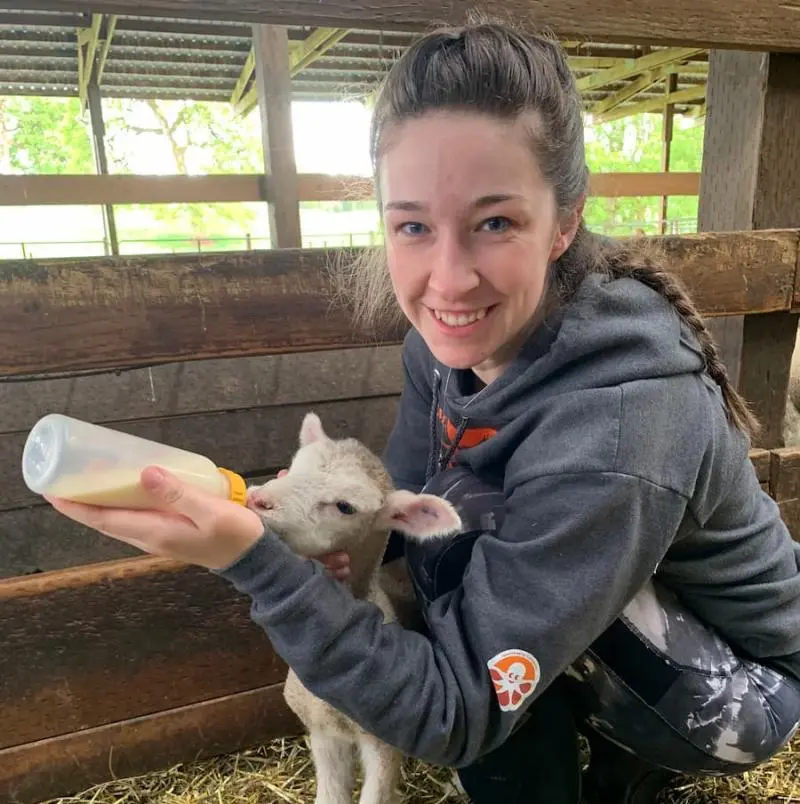
With the rapid shift to online teaching and learning, University Information and Technology (UIT) realized that students and instructors would benefit from some additional support during Zoom-based classroom sessions. Our Academic Technology team quickly developed the Technical Keep Teaching Assistant (TechKTA) program, which utilized student employees to facilitate and moderate online classes. The service reduced friction and frustration for students and instructors alike, helping to make online learning as effective as possible. You can learn more about the program from Anice Teel and Charity Kaiolohia Kahai, two of the student employees who took part.
Equipping Students for Success
At the beginning of the pandemic, UIT partnered with Student Affairs and the Valley Library to quickly purchase and collect hundreds of computers: when many on-campus computers were no longer easily accessible, more than 700 devices were made available to the OSU community members who needed them.
"I really appreciate how the university loans out laptops. I couldn't have completed my thesis and therefore graduated without this opportunity!"
-Michaela Rybolt, Oregon State University Honors College Biology Major | Animal Sciences Minor | Pre-Veterinary Medicine Option
Here Come the Robots!
Though the campus was relatively empty for much of the past year, OSU did welcome some new, COVID-safe residents: a fleet of wheeled delivery robots. A program within University Housing and Dining Services brought the "coolers on wheels" to campus in October. The service enables online ordering and contactless deliveries from OSU restaurants and is an example of a creative solution to a very real safety problem during the pandemic. This innovative program is no novelty: on a busy day, the delivery robots deliver more than 1000 orders.
Powering Public Health Research
One of the interesting ways that OSU participated in the pandemic response was with the TRACE program. Part epidemiological research, part public health tool, TRACE used widespread COVID testing and wastewater analysis to understand the prevalence of COVID-19 in Corvallis — specifically at OSU — and other locations within the state. When TRACE needed data integrations, workflows and computing infrastructure to power their program, COSINE IT, UIT and the CGRB partnered to make sure that this critical work had the technology it needed to be successful. Ultimately the TRACE program provided valuable, actionable insights to OSU and local health officials while they managed the pandemic; the research data gathered will also help to more broadly optimize future response to similar events.
Learn more about other programs in our IT Strategic Roadmap that pave the way for Next-Generation thinking for Research Redesign.
Learn more about other programs in our IT Strategic Roadmap that will enable us to Work Smarter at OSU.
Connecting Students and Advisors
Remote teaching, learning and working at OSU challenged our customary ways of working. Academic advising is a critical piece of the student success puzzle, and without a physical presence on campus, advisors were forced to move to an online-only paradigm to deliver their services. To ease the transition from in-person to online only, UIT process analysts collaborated with head advisors to develop a digitally-native process for students and advisors to schedule and manage advising appointments. In addition to designing a robust, efficient process that worked in the online world, this shared process resulted in a nearly universal practice for scheduling appointments at OSU.
Connecting our Classrooms
With the initial shift to remote teaching, learning, and working complete, during the Summer of 2020, OSU IT began an ambitious program to outfit nearly every classroom on campus with cameras and microphones to support remote delivery of classroom-based instruction. This effort, called Operation 231, gave instructors a familiar, controlled setting from which to deliver their materials, and one where they could count on a high-quality internet connection as well as top-quality video and audio hardware. Outfitting these classrooms was an all-hands-on-deck effort with dozens of OSU IT community members volunteering to assist. Going forward, our internet-enabled classrooms will provide additional flexibility to support hybrid and distance-learning modalities.
Operation 231 directly relates to our Next-Generation Thinking for Transforming the Learner Landscape. Learn more about this work in the IT Strategic Roadmap.
Business as (Un)Usual
Despite the COVID pandemic and the formidable disruption it caused, we continued to advance the university's strategic initiatives and make progress on the many programs that we have committed to. In addition to designing and supporting modified services in light of the pandemic, we deepened our research support, delivered new capabilities for teaching and learning, expanded our reach throughout the state, and helped to establish, grow and refine our administrative services.
Learn more about other programs in our IT Strategic Roadmap that are focused on Building Better.
Enabling Digital Transformation
Serving our students and assisting them in their OSU journey is central to our mission as a university. Balancing students' privacy expectations and legal/regulatory requirements with the desire to reduce red tape and administrative burdens is a tricky balance. With enhanced capabilities around digital signatures and workflows, the Office of the Registrar worked with UIT to design and implement secure online forms for students. Because of the legal and privacy considerations, the shift to digital forms required security review and a new policy for FERPA-protected data. These new forms are a win-win for the university, creating a streamlined, convenient process for students while protecting their data and eliminating manual work in administrative offices.
Opening New Doors for Research
When one of the researchers in the College of Public Health and Human Sciences (CPHHS) applied for a new, multi-million dollar grant, one of the requirements involved having a cloud-based research infrastructure that was compliant with rules for Confidential Unclassified Information (CUI). The CPHHS team approached UIT for help with this project, and UIT immediately assembled a team to design and instantiate the needed technology. IT's ability to nimbly pivot and meet this need was a key factor in the grant being awarded to OSU.
See other ways we are redesigning our approach to supporting research in the IT Strategic Roadmap.


Doing Business with OSU
Higher education is sometimes described as 'many industries in one', as we operate in education, healthcare, financial services, travel, athletics, research, public safety, food service, housing and others. Because of this, when OSU decided to work with a new bank, there were many complex systems to understand and account for. The administrative technologies team worked quickly with Finance and Administration to change OSU's primary financial institution to JP Morgan Chase.
Supercharging our Workforce
The team behind OSU's Talent Management initiative had a problem to solve: there were hundreds of professional development and training opportunities available to employees at OSU, but they were spread across dozens of websites owned by dozens of organizations. In order to maximize the awareness and effectiveness of our training offerings, the Talent Management team wanted to create a comprehensive, centralized catalog of these resources; rather than create a separate website, UIT's Digital Experience team worked with the Talent Management team to design and build a new training feature in MyOregonState where thousands of employees are sure to see — and use — it.
Safeguarding Our Mission
One of the central themes of our work in the past year that will continue to be a critical area of focus in the future is cybersecurity. OSU hired its first Chief Information Security Officer (CISO) in 2019 and the progress we have made since then toward protecting the institution and its mission is remarkable. In the past year we have taken decisive action to eliminate hundreds of security vulnerabilities on our internet-facing systems. We have deployed enterprise-wide tools to inventory, manage and protect OSU systems. We have re-architected our network software to improve security, reduce redundancy and enable intelligent access to the right people in the right ways at the right times. We are actively recruiting for a deputy CISO and are acting on our strategic plan to make cybersecurity a key consideration for all of IT at OSU.
Responding to Growing Cyberscurity Threats
Cybercrime has proliferated in recent years and OSU is behind the curve in terms of our ability to detect and protect against very real, very costly attacks. Though we have accomplished much, we still have lots to do; modern cyberthreats require us to invest and change our culture, policy and practice in order to protect the university and its mission. We must continue our efforts to map the threat landscape and update our practices to enable thoughtful, scalable, safe access to OSU systems and data.
See other programs related to Safeguarding Our Mission as part of Mission Control in the IT Strategic Roadmap.
Accomplishments Across OSU IT
OSU IT has accomplished much more in the past year than has been highlighted in our stories throughout the annual report. There is simply too much meaningful and impactful work being done to give it all the attention that is deserved. Below is an inventory of more IT achievements and activities from across the university.
The IT Communications team worked with dozens of subject matter experts to create and disseminate critical information on the Keep Teaching, Keep Learning, Keep Working and COVID websites.
Finance and Administration IT lent critical assistance to several key COVID actions including sourcing and distributing personal protective equipment, performing analysis for resumption space planning, and creating building signage.
The IT Infrastructure team partnered with distributed IT to analyze and enhance virtual desktop and VPN capacity, ensuring that instructors, employees and researchers had remote access to the on-campus resources they needed during remote operations.
The Valley Library IT team worked to support the provision of library services in an outdoor setting to ensure continuity of services and to ensure safety.
The Networking team acted quickly to set up temporary wi-fi access for wildfire refugees and vaccine clinics.
The Infrastructure team worked quickly to enable and socialize Microsoft Teams for the entire campus community, creating a new, realtime communication and collaboration medium during remote operations.
Finance and Administration deployed license plate scanning technology for parking enforcement; the new solution increases coverage while reducing labor costs.
UIT and distributed IT worked together with thousands of members of the OSU community to complete the migration to a shared, cloud-based email solution.
Administrative Technologies partnered with Enrollment Management to implement Slate, a best-of-breed tool to recruit and matriculate new undergraduate students.
The Learn@OregonState team partnered with instructors to evaluate and implement Proctor.io, an online proctoring solution to enable test-taking during remote learning.
Extension and UIT partnered to deploy the Guild learning management system which enables professional and continuing education and non-credit learning, an important new revenue stream for OSU.
The Network team worked with Extension and statewide partners to upgrade network connections at the Hatfield Marine Science Center and to bring broadband to the edge of Oregon, improving reliability and working to bridge the digital divide.
The Telecom team upgraded OSU's phone system, leveraging the latest software and hardware technology and ensuring stability, uptime and emergency and disaster recovery capability.
Extension leadership worked with UIT to promote the FCC Emergency Broadband Benefit (EBB) program to all Oregonians, helping households connect during the pandemic.
UIT launched the new softwarelist.oregonstate.edu site, a hackathon project that makes it easier for students and employees to find and get the software they need to be successful and productive at OSU.
IT Strategic Roadmap
In addition to COVID challenges, ongoing operations and cybersecurity threats, during the past year we have taken bold action to assess, rethink and redesign our culture, organization and strategy for IT across the university. After hundreds of conversations, meetings and inquiries with partners, stakeholders and the IT community, we finalized our IT Strategic Plan for the next five years and turned our focus toward a critical component: implementation. Over the last six months, we have worked with our university business partners to prioritize and resource key strategies and projects for the next 18-24 months, as outlined in our IT Roadmap. These first steps will help us better align our vision and efforts with the university's goals, challenge historical assumptions about funding and resources, and mature and grow our organization and the value of our work.
Our Shared Journey
As we plan to return to in-person activities at OSU this fall, we acknowledge that this "new normal" is really not that normal at all. The effects of the pandemic and recent events will be felt at OSU, in Oregon, and beyond for years to come. Despite all of this, the world won't wait. We have work to do. Though much has changed and much has been accomplished in the past year, in many respects we are just getting started. With a shared vision, a shared strategy and a shared plan, we are about to embark on a shared journey together, one that we have been carefully preparing for for more than a year. Now, it's time to embark on our next Grand Expedition.